
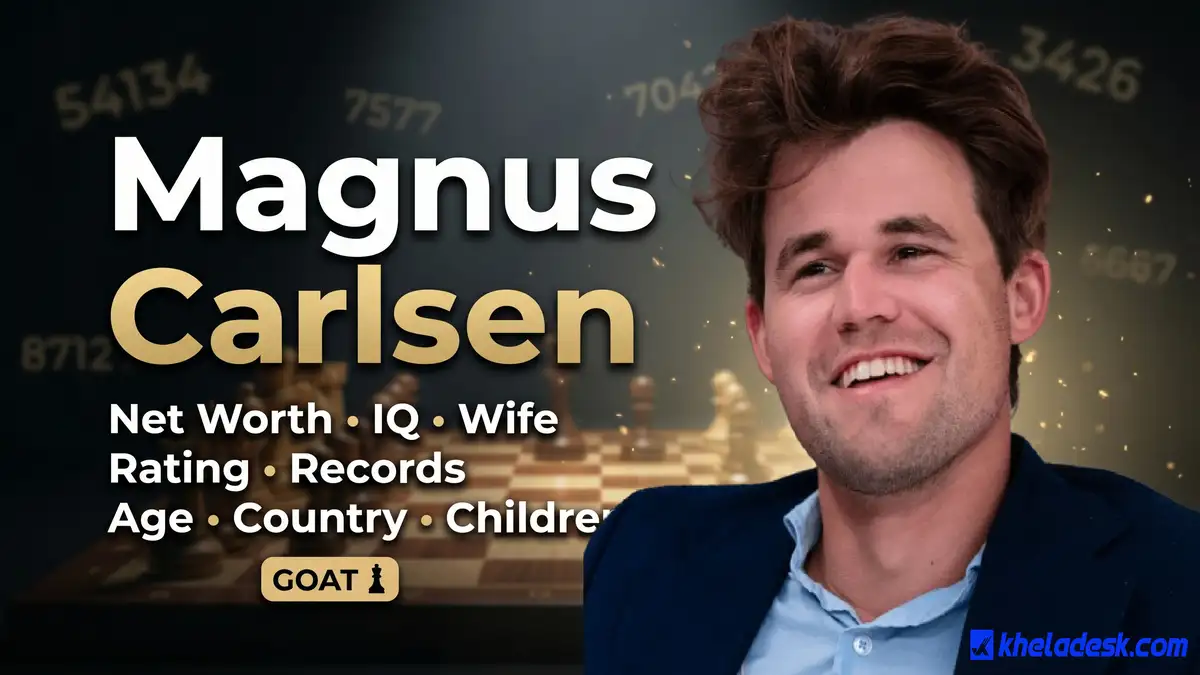
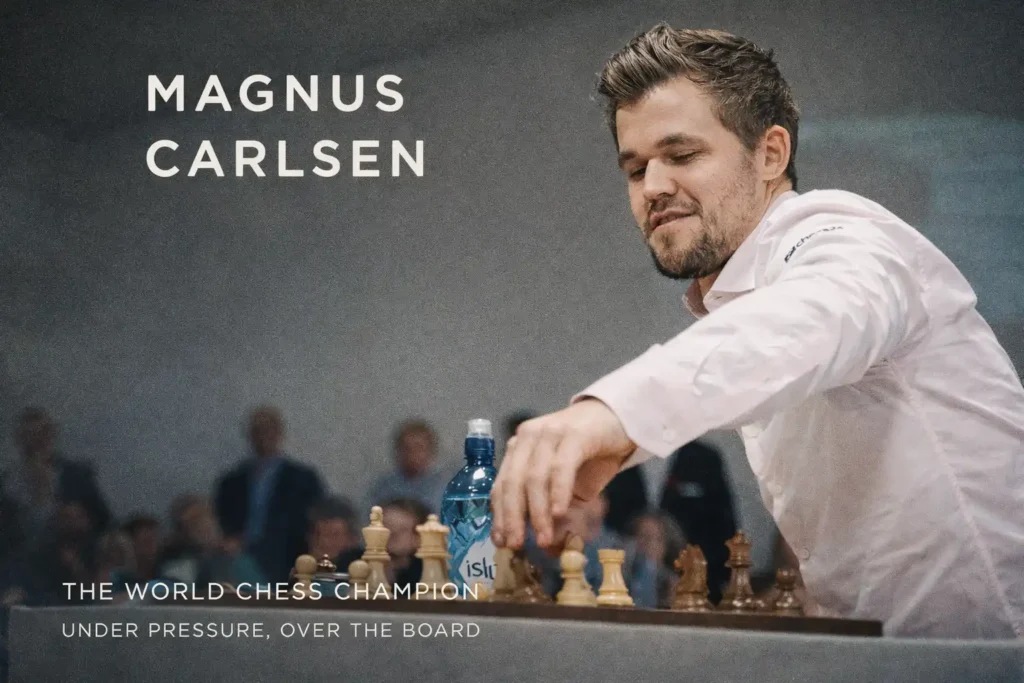
Magnus Carlsen is widely regarded as one of the greatest chess players in history. The Norwegian grandmaster has redefined modern chess through his exceptional consistency, strategic brilliance, and ability to outperform the world’s strongest opponents across every major format of the game. Whether competing in classical, rapid, blitz, or freestyle chess, Carlsen has established himself as one of the most complete and influential players the sport has ever seen.
Born as Sven Magnus Øen Carlsen on November 30, 1990, in Tønsberg, Norway, Carlsen displayed extraordinary intellectual ability from an early age. Long before discovering chess, he impressed his family with his exceptional memory, curiosity, and talent for solving puzzles. His fascination with geography, patterns, and logical thinking laid the foundation for the remarkable analytical skills that would later define his career.
Carlsen learned the rules of chess from his father at the age of five. What began as a simple family pastime quickly developed into an extraordinary passion. Within just a few years, he emerged as one of Europe’s brightest young chess talents and, in 2004, earned the prestigious Grandmaster title at the age of 13 years, 4 months, and 27 days, making him one of the youngest grandmasters in history at that time.
His breakthrough on the world stage came in 2013, when he defeated Viswanathan Anand to become the 16th Undisputed World Chess Champion. Over the following years, Carlsen successfully defended his title four times, achieved the highest official classical FIDE rating of 2882 Elo, and maintained his position among the world’s elite players for more than a decade after first becoming World No. 1 in 2010.
Beyond his achievements over the board, Magnus Carlsen has transformed the modern chess landscape through entrepreneurship, digital education, online platforms, streaming, and innovative chess events. His contributions have helped introduce the game to millions of new players worldwide, making him not only one of the greatest competitors in chess history but also one of its most influential ambassadors.
Whether you’re looking for Magnus Carlsen’s biography, age, family, education, wife, child, IQ, FIDE rating, world championship journey, records, achievements, business ventures, net worth, or playing style, this comprehensive guide brings together everything you need to know about one of the most iconic figures in the history of chess.
Magnus Carlsen Profile
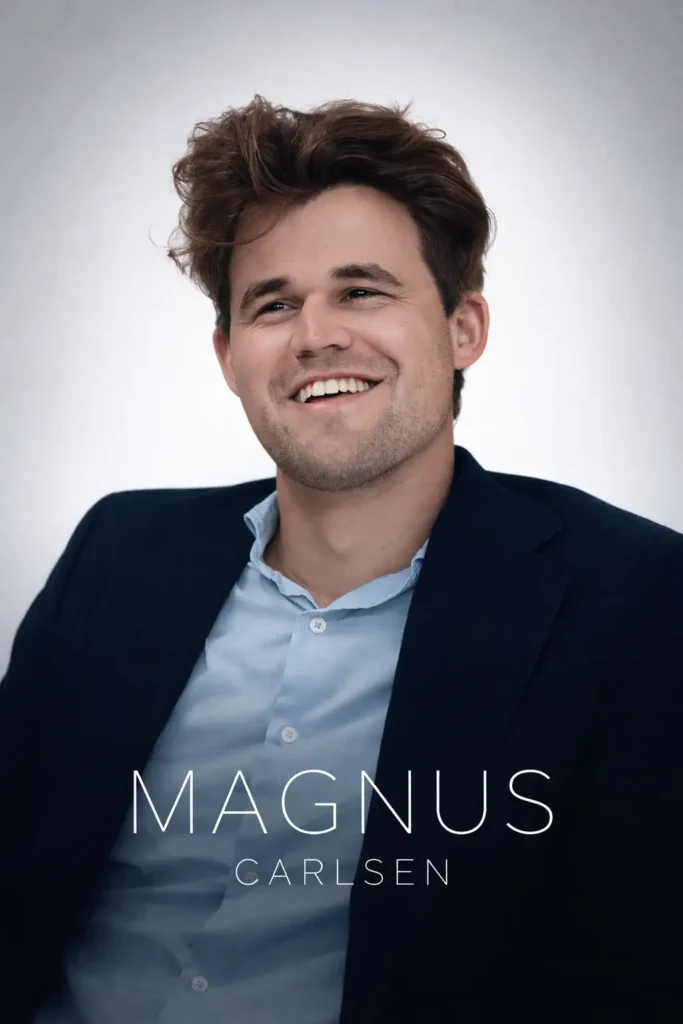
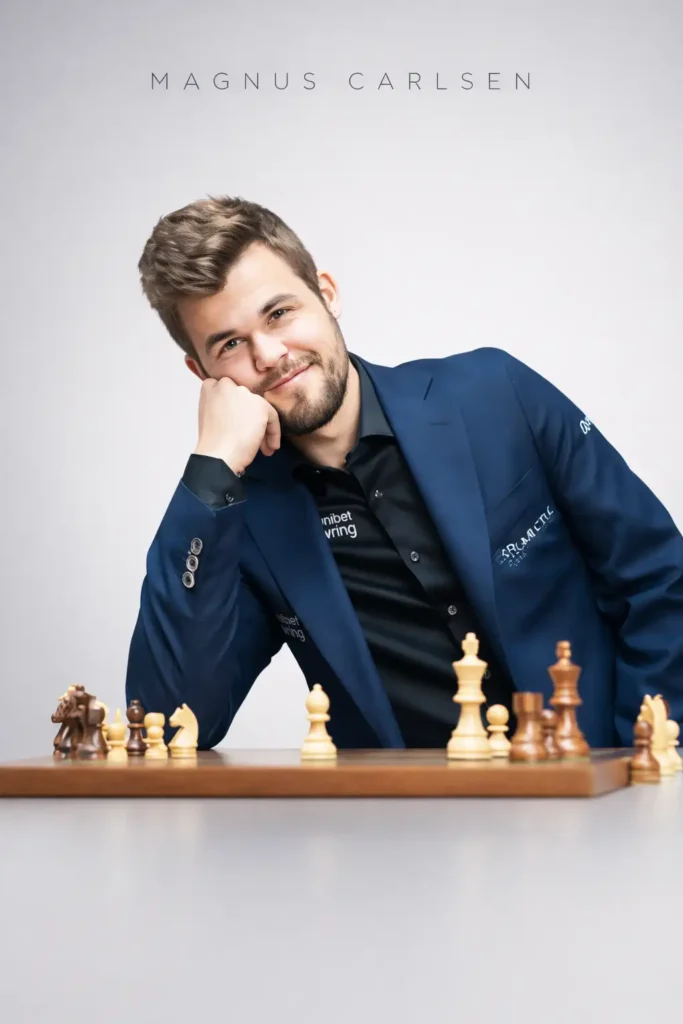
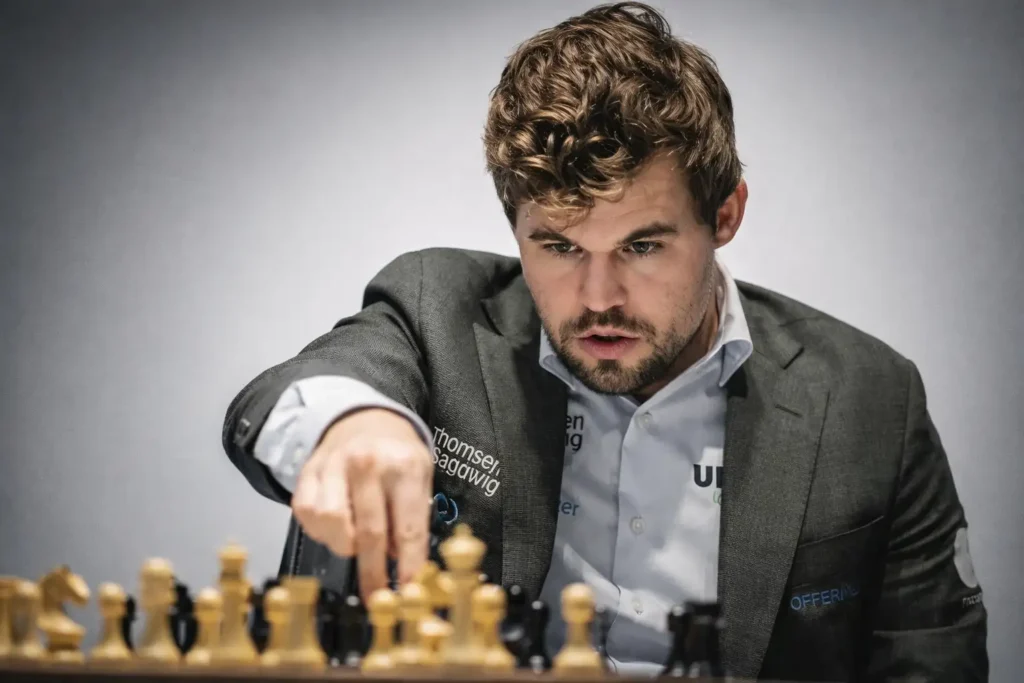
| Category | Details |
|---|---|
| Full Name | Sven Magnus Øen Carlsen |
| Popular Name | Magnus Carlsen |
| Date of Birth | November 30, 1990 |
| Age (2026) | 35 years |
| Birthplace | Tønsberg, Norway |
| Nationality | Norwegian |
| Profession | Chess Grandmaster and Entrepreneur |
| Peak Classical FIDE Rating | 2882 |
| Classical World Championship Titles | 5 |
| Estimated Net Worth (2026) | Around US$25 million (widely reported estimate) |
| Wife | Ella Victoria Carlsen (née Malone) |
| Children | One son |
| First Became World No. 1 | 2010 |
| Legacy | One of the greatest chess players in history |
Early Life and Childhood
Magnus Carlsen’s rise to becoming one of the greatest chess players in history began long before he ever sat down at a chessboard. Growing up in Norway, he displayed an extraordinary memory, an insatiable curiosity, and a love of learning from an early age. His childhood was filled with puzzles, books, geography, and intellectual challenges that helped shape the skills he would later use to dominate the chess world.
Unlike many child prodigies, Magnus was never pushed into competitive chess. Instead, he was raised in a supportive family that valued curiosity, creativity, and independent thinking. This balanced upbringing allowed him to develop naturally, laying the foundation not only for his success as a chess player but also for his calm and thoughtful approach to life.
Where Was Magnus Carlsen Born?
Magnus Carlsen, whose full name is Sven Magnus Øen Carlsen, was born on November 30, 1990, in Tønsberg, Norway. As one of the country’s oldest cities, Tønsberg is known for its rich history and cultural heritage.
Although he was born there, Magnus spent most of his childhood in Lommedalen, a peaceful suburban community in the municipality of Bærum, just outside Oslo. It was in this environment that his love of learning flourished and where he would eventually discover the game that changed his life.
Growing Up in Norway
Magnus grew up in a home where education, curiosity, and personal development were encouraged above competition or achievement.
His parents believed that children learn best when they are free to explore their interests, so they never pressured him to excel in academics or sports. Instead, they fostered an atmosphere where asking questions, solving problems, and discovering new ideas were part of everyday life.
Outside of school, Magnus enjoyed reading, solving puzzles, studying geography, and playing football with friends. These activities strengthened his concentration, patience, and analytical thinking long before chess became his primary focus.
The combination of a peaceful lifestyle and unwavering family support gave him the freedom to develop at his own pace—an advantage that would later prove invaluable throughout his chess career.
An Extraordinary Memory
Long before he became known as a chess prodigy, Magnus Carlsen had already shown remarkable intellectual abilities.
According to his family, he could complete 50-piece jigsaw puzzles by the age of two, an impressive accomplishment for a child so young. By the time he was around five years old, he had memorized the names, capitals, flags, and locations of nearly every country in the world.
More importantly, he possessed an exceptional ability to recognize patterns and retain information. These cognitive strengths would eventually become some of the defining features of his chess style, allowing him to evaluate positions quickly and understand complex strategic ideas with remarkable ease.
Childhood Interests
Chess was not Magnus Carlsen’s first passion.
As a young boy, he was fascinated by geography, mathematics, puzzles, books, and football. Each of these interests contributed to the development of skills that later proved invaluable over the chessboard.
Whether solving a difficult puzzle or learning about countries around the world, Magnus approached every challenge with curiosity and determination. Rather than simply memorizing information, he wanted to understand how things worked and why they worked that way.
That desire to grasp the underlying ideas behind complex problems would later become one of the defining characteristics of his playing style.
The Foundation of a Future Champion
Looking back, Magnus Carlsen’s childhood was built on three essential pillars: curiosity, family support, and independent learning.
His parents encouraged him to ask questions, think critically, and enjoy the process of learning instead of focusing solely on winning or achieving recognition. This philosophy gave him the confidence to explore ideas independently and develop his own way of thinking.
These early experiences nurtured the patience, resilience, and analytical mindset that eventually helped transform a curious Norwegian boy into one of the greatest chess players the world has ever seen.
Early Life at a Glance
| Category | Details |
|---|---|
| Full Birth Name | Sven Magnus Øen Carlsen |
| Date of Birth | November 30, 1990 |
| Birthplace | Tønsberg, Norway |
| Childhood Home | Lommedalen, Bærum, Norway |
| Nationality | Norwegian |
| Father | Henrik Albert Carlsen |
| Mother | Sigrun Øen |
| Siblings | Three sisters |
| Childhood Interests | Geography, puzzles, football, reading |
| Introduced to Chess | Age 5 |
| Early Strength | Exceptional memory and pattern recognition |
Early Life Highlights
| Topic | Summary |
|---|---|
| Birth | Born in Tønsberg, Norway, on November 30, 1990. |
| Childhood | Raised primarily in Lommedalen, Bærum, near Oslo. |
| Family | Grew up in a supportive home that emphasized education, curiosity, and independent thinking. |
| Memory | Displayed extraordinary memory and pattern recognition from an early age. |
| Interests | Enjoyed puzzles, geography, reading, mathematics, and football before discovering chess. |
| Foundation for Success | Curiosity, analytical thinking, and strong family support helped shape the future world champion. |
Family Background and Parents
Behind Magnus Carlsen’s extraordinary achievements lies a family that valued curiosity, education, and independent thinking. While his natural talent played a crucial role in his rise to the top of the chess world, the encouragement and guidance he received at home were equally important.
Rather than placing pressure on him to win tournaments or become a chess prodigy, Magnus’s parents created an environment where learning was enjoyable and exploration was encouraged. This supportive upbringing allowed him to develop both as a person and as a player, helping him build the confidence, discipline, and creativity that would later define his career.
Henrik Albert Carlsen (Father)
Magnus Carlsen’s father, Henrik Albert Carlsen, is an information technology (IT) consultant from Norway.
Henrik was the person who first introduced Magnus to chess when he was just five years old. Instead of pushing him into serious training, he patiently explained the rules and allowed his son’s interest in the game to develop naturally.
As Magnus’s talent became increasingly evident, Henrik devoted considerable time to supporting his son’s progress. He accompanied Magnus to youth tournaments throughout Norway and across Europe, providing both practical support and encouragement during the formative years of his chess career.
His calm and patient approach laid the foundation for Magnus’s remarkable development and lifelong love of the game.
Sigrun Øen (Mother)
Magnus Carlsen’s mother, Sigrun Øen, is a qualified chemical engineer.
While Henrik introduced Magnus to chess, Sigrun played an equally important role in ensuring he enjoyed a balanced and well-rounded childhood. She encouraged reading, education, family activities, and personal growth alongside his growing interest in chess.
As Magnus rose through the ranks of international chess, Sigrun remained one of his strongest supporters. She helped maintain a stable family life, ensuring that success in competition never overshadowed his education, well-being, or relationships.
Her influence helped Magnus stay grounded despite achieving worldwide recognition at a young age.
Magnus Carlsen’s Sisters
Magnus Carlsen is the only son in his family and has three sisters.
Unlike Magnus, his sisters have chosen to live largely outside the public eye and have not pursued professional chess careers. The Carlsen family has consistently valued privacy, and relatively little personal information about his sisters has been shared publicly.
Despite Magnus’s international fame, the family’s close relationships have remained an important source of stability and support throughout his career.
A Family That Valued Learning
One of the defining features of Magnus Carlsen’s upbringing was his family’s philosophy toward education and personal development.
His parents believed that children learn best when they are free to explore their interests rather than being pressured to achieve immediate results. Instead of focusing solely on success, they encouraged curiosity, critical thinking, and a genuine enjoyment of learning.
This approach helped Magnus develop many of the qualities that later became central to his success, including patience, discipline, confidence, resilience, and a deep love of problem-solving.
Supporting His Chess Career
As Magnus began competing in national and international tournaments, his parents invested significant time and energy in supporting his development.
They traveled with him to competitions, helped organize his tournament schedule, and ensured he had opportunities to face stronger opponents from an early age. At the same time, they worked hard to preserve a healthy balance between chess, education, and family life.
Their unwavering support allowed Magnus to gain valuable experience without sacrificing the stability and enjoyment of a normal childhood.
Family Information
| Category | Details |
|---|---|
| Father | Henrik Albert Carlsen |
| Father’s Profession | Information Technology (IT) Consultant |
| Mother | Sigrun Øen |
| Mother’s Profession | Chemical Engineer |
| Siblings | Three sisters |
| Birth Order | Only son |
| Nationality | Norwegian |
| Family Residence | Bærum, Norway |
| First Chess Teacher | Henrik Albert Carlsen |
| Family Values | Education, curiosity, independent thinking |
Parents at a Glance
| Parent | Contribution |
|---|---|
| Henrik Albert Carlsen | Introduced Magnus to chess, nurtured his early interest, and supported his development through youth tournaments. |
| Sigrun Øen | Encouraged education, emotional balance, and personal growth while helping maintain a stable family life. |
| Both Parents | Created a supportive environment where Magnus could develop naturally without unnecessary pressure or unrealistic expectations. |
Family Highlights
| Topic | Summary |
|---|---|
| Family Environment | Supportive, intellectually stimulating, and centered on education and curiosity. |
| First Chess Teacher | Henrik Albert Carlsen introduced Magnus to chess at the age of five. |
| Mother’s Role | Encouraged balance between chess, education, and everyday family life. |
| Siblings | Three sisters who have largely remained out of the public spotlight. |
| Greatest Influence | A family philosophy that emphasized learning, curiosity, and personal development over competition alone. |
Magnus Carlsen’s story shows that extraordinary talent flourishes best in the right environment. While his remarkable abilities set him apart, it was the steady encouragement, patience, and unwavering support of his family that helped transform a curious young boy into one of the greatest chess players in history.
Education
Although Magnus Carlsen is best known for his achievements on the chessboard, his educational journey reflects the same curiosity, discipline, and commitment to learning that have defined his career. Raised in Norway, he received a formal education while simultaneously developing into one of the world’s most promising young chess players.
As his international chess career accelerated during his teenage years, balancing school with frequent travel became increasingly challenging. Even so, Magnus and his family continued to value education, ensuring that his academic development remained an important part of his upbringing.
Where Did Magnus Carlsen Study?
Magnus Carlsen attended school in Norway throughout his childhood and early teenage years. He completed his primary and lower secondary education before competitive chess became the central focus of his life.
As invitations to international tournaments became more frequent, spending long periods away from the classroom became unavoidable. Despite these challenges, Magnus continued his studies while competing against some of the strongest players in the world.
His early education provided a solid academic foundation, while his growing chess career introduced him to experiences that extended far beyond the classroom.
Balancing School and Chess
Managing schoolwork alongside a demanding tournament schedule required careful planning and discipline.
During his teenage years, Magnus regularly traveled across Europe and other parts of the world to compete in prestigious chess events. These trips often meant being away from home and missing traditional classroom lessons.
With the support of his parents, teachers, and school, he successfully balanced his academic responsibilities with the demands of elite competition. His experience demonstrates that determination, effective time management, and a strong support system can make it possible to pursue both education and high-level sporting ambitions.
Learning Beyond the Classroom
While formal schooling played an important role in his development, much of Magnus Carlsen’s education came through independent learning.
He devoted countless hours to studying chess books, analyzing classic grandmaster games, solving tactical puzzles, reviewing his own performances, and learning from experienced coaches. This habit of self-directed study became a cornerstone of his daily routine and played a major role in his rapid improvement.
Beyond chess itself, these experiences strengthened his ability to think critically, recognize patterns, solve complex problems, and make sound decisions under pressure.
Education’s Role in His Success
Magnus Carlsen has often shown that chess is about far more than memorizing opening moves.
His success is built on critical thinking, creativity, adaptability, and the ability to evaluate complex situations with patience and precision. These qualities are closely connected to the lifelong habit of learning rather than simple memorization.
Although Magnus chose to pursue professional chess instead of a traditional academic career, the values of education, curiosity, and continuous self-improvement have remained central to his success both on and off the chessboard.
Education Information
| Category | Details |
|---|---|
| Country of Education | Norway |
| Primary Education | Completed in Norway |
| Lower Secondary Education | Completed while pursuing competitive chess |
| Higher Education | Did not attend university |
| Primary Career Focus | Professional chess |
| Learning Style | Combination of formal education and self-directed study |
| Key Skills Developed | Critical thinking, analytical reasoning, problem-solving, and discipline |
Education at a Glance
| Topic | Summary |
|---|---|
| Schooling | Completed his primary and lower secondary education in Norway. |
| Chess Career | Became his primary focus during his teenage years as international tournaments increased. |
| University | Chose not to pursue a university degree, focusing instead on professional chess. |
| Self-Learning | Strengthened his skills through books, game analysis, tactical training, and independent study. |
| Key Lesson | Curiosity, discipline, and lifelong learning played a major role in his success. |
Frequently Asked Questions
Did Magnus Carlsen go to university?
No. Magnus Carlsen did not attend university. As his chess career progressed rapidly during his teenage years, he chose to dedicate himself fully to professional chess rather than pursuing a university degree.
Did Magnus Carlsen finish school?
Yes. Magnus completed his primary and lower secondary education in Norway before focusing entirely on his career as a professional chess player.
How did Magnus Carlsen balance school and chess?
With the support of his family, teachers, and school, Magnus continued his education while traveling internationally for tournaments and training. Careful time management and disciplined study habits enabled him to balance academic responsibilities with the demands of elite competition.
A Lifelong Commitment to Learning
Magnus Carlsen’s educational journey illustrates that learning extends far beyond the classroom. While he chose a different path from traditional higher education, his success has always been driven by curiosity, discipline, and a willingness to improve every day.
Whether studying school subjects, analyzing chess positions, or learning from experience, Magnus embraced continuous learning throughout his life. That mindset has been just as important to his achievements as his extraordinary natural talent, helping him become one of the greatest chess players in history.
How Magnus Carlsen Learned Chess
Every great champion has a beginning, and for Magnus Carlsen, it started with a simple lesson from his father. What began as a family activity gradually evolved into a lifelong passion, eventually leading him to become one of the greatest chess players the world has ever seen.
Unlike many chess prodigies, Magnus was never pressured to master the game. His interest developed naturally, driven by curiosity and a genuine love of solving problems. This freedom to learn at his own pace became one of the defining factors behind his remarkable progress.
When Did Magnus Carlsen Start Playing Chess?
Magnus Carlsen was introduced to chess at the age of five by his father, Henrik Albert Carlsen.
At first, he showed little enthusiasm. Like many young children, Magnus preferred playing with toys, exploring the outdoors, and enjoying other hobbies rather than sitting at a chessboard.
Everything changed once he realized that every chess position presented a new puzzle to solve. The game’s endless variety and intellectual challenge captured his imagination, transforming casual curiosity into a lasting passion.
Who Taught Magnus Carlsen Chess?
Magnus learned the fundamentals of chess from his father.
Henrik patiently explained how each piece moved, demonstrated the basic rules, and encouraged his son to enjoy the game instead of worrying about winning. Rather than creating pressure, he made learning fun and allowed Magnus to explore the game at his own pace.
This relaxed and supportive environment nurtured curiosity instead of competition, giving Magnus the confidence to think independently and develop his own understanding of chess.
Developing a Passion for Chess
Once Magnus understood the basic rules, his fascination with chess grew rapidly.
He became intrigued by the strategic depth of the game and enjoyed discovering new ideas, analyzing different positions, and finding creative solutions during play.
Instead of memorizing moves, Magnus wanted to understand why strong players chose certain plans. He focused on the ideas behind each move rather than simply copying established theory.
This concept-based approach would later become one of the defining characteristics of his playing style.
Learning Through Books and Practice
As his enthusiasm for chess increased, Magnus dedicated more and more time to studying the game.
He read instructional chess books, solved tactical puzzles, analyzed classic games played by legendary grandmasters, and regularly challenged stronger opponents.
Rather than relying heavily on opening theory, he concentrated on building a complete understanding of chess. He worked to improve every aspect of his game, including strategy, tactics, positional play, and endgame technique.
This balanced approach helped him develop into one of the most versatile players in modern chess.
Early Coaching
As Magnus’s extraordinary talent became increasingly apparent, he began receiving guidance from experienced coaches.
One of the most influential figures during his early development was Grandmaster Simen Agdestein, Norway’s first grandmaster and a respected chess coach.
Agdestein helped Magnus strengthen his positional understanding, improve his tournament preparation, and develop the confidence needed to compete at the highest level. At the same time, he encouraged Magnus to preserve his creativity and cultivate his own unique style rather than simply imitate other players.
What Helped Magnus Carlsen Improve So Quickly?
Several factors contributed to Magnus Carlsen’s remarkably rapid development.
His exceptional memory allowed him to recognize familiar patterns with remarkable speed, while his natural curiosity motivated him to understand ideas instead of memorizing moves. Combined with thousands of hours of focused practice, these qualities enabled him to progress much faster than most young players.
His ability to learn from both victories and defeats also played an important role in his continued improvement.
Training Habits
Magnus’s training emphasized understanding over memorization.
Rather than spending all of his time studying long opening variations, he worked to become a complete player capable of handling any type of position.
His regular training routine often included:
- Studying classic grandmaster games
- Solving tactical exercises
- Reviewing his own games and mistakes
- Practicing endgame technique
- Playing training games against strong opponents
- Improving his strategic and positional understanding
This comprehensive preparation helped him make confident and accurate decisions throughout every stage of the game.
Lessons From Magnus Carlsen’s Chess Journey
Magnus Carlsen’s development offers valuable lessons for chess players of every level.
His career demonstrates that curiosity, disciplined practice, and a deep understanding of chess are far more valuable than simply memorizing opening lines. True improvement comes from learning how positions work, analyzing mistakes, and continually expanding your understanding of the game.
Even today, these principles remain at the heart of Carlsen’s playing style and are among the key reasons for his remarkable consistency at the highest level.
How Magnus Carlsen Learned Chess at a Glance
| Category | Details |
|---|---|
| Started Playing Chess | Age 5 |
| First Teacher | Henrik Albert Carlsen |
| Initial Interest | Limited at first |
| Main Motivation | Solving chess problems and strategic puzzles |
| Early Coach | Grandmaster Simen Agdestein |
| Primary Learning Method | Self-study combined with regular practice |
| Training Focus | Strategy, tactics, endgames, and positional understanding |
| Key Strength | Exceptional pattern recognition and deep positional insight |
Chess Learning Timeline
| Age | Development |
|---|---|
| 5 | Learned the basic rules of chess from his father. |
| 6–7 | Began playing regularly and solving simple chess puzzles. |
| 8–10 | Competed in local tournaments and improved rapidly. |
| 11–12 | Started defeating stronger opponents and earned national recognition. |
| 13 | Achieved the Grandmaster title in 2004, becoming one of the youngest grandmasters in history. |
Frequently Asked Questions
At what age did Magnus Carlsen learn chess?
Magnus Carlsen learned chess at the age of five, when his father introduced him to the game and taught him the basic rules.
Who was Magnus Carlsen’s first chess teacher?
His first chess teacher was his father, Henrik Albert Carlsen, who introduced him to the game in a relaxed and supportive environment.
Who coached Magnus Carlsen?
During his early development, Grandmaster Simen Agdestein played a significant role in refining Magnus’s skills and helping him transition from a talented junior player to an international competitor.
Did Magnus Carlsen memorize openings?
Not as his primary focus. While Magnus certainly studied opening theory, he placed far greater emphasis on understanding positions, mastering endgames, improving strategic decision-making, and developing complete chess skills rather than relying solely on memorization.
A Learning Philosophy That Shaped a Champion
Magnus Carlsen’s journey into chess demonstrates that lasting success is built on curiosity, patience, and a genuine desire to understand the game. Rather than searching for shortcuts, he focused on building strong fundamentals, learning from experience, and continually refining his skills.
That philosophy transformed a curious five-year-old learning chess from his father into one of the most dominant and respected players in the history of the game.
Professional Chess Career
Magnus Carlsen’s professional chess career stands among the greatest success stories in modern sport. Rising from a gifted Norwegian teenager to the highest-rated player in chess history, he has spent more than two decades competing against—and consistently defeating—the world’s strongest grandmasters.
What sets Carlsen apart is not only the number of titles he has won but also his remarkable consistency and versatility. While many champions have excelled primarily in classical chess, Carlsen has dominated every major format, including classical, rapid, blitz, and freestyle chess. His ability to perform at the highest level across different time controls has secured his place as one of the most complete players the game has ever known.
Early Professional Career (2000–2003)
Magnus Carlsen began competing in national and international tournaments while he was still a child. Facing older and more experienced opponents from an early age, he quickly gained valuable competitive experience and developed the confidence to challenge stronger players.
His impressive performances attracted widespread attention within Norway’s chess community. Coaches and experienced grandmasters recognized his extraordinary talent, exceptional memory, and rare ability to understand complex positions beyond his years.
By the age of 12, Carlsen had already established himself as one of Europe’s brightest young chess prospects, with many experts predicting a remarkable future.
Becoming a Grandmaster (2004)
The defining breakthrough of Carlsen’s early career came in 2004, when he earned the prestigious Grandmaster (GM) title.
At just 13 years, 4 months, and 27 days old, he became one of the youngest grandmasters in the world at the time. The achievement confirmed what many chess experts had already suspected—Magnus was far more than a talented junior player. He was emerging as one of the most exciting young stars in international chess.
Earning the Grandmaster title also marked the beginning of Norway’s rise as a major force in the chess world.
Rising Through the Elite (2005–2009)
Following his Grandmaster title, Carlsen’s rise through the international rankings was remarkably rapid.
He competed in some of the world’s strongest tournaments, regularly defeating established grandmasters and steadily increasing his FIDE rating. During this period, he crossed both the 2700 and 2800 Elo milestones, becoming one of the youngest players ever to achieve those remarkable ratings.
By the end of the decade, Carlsen was widely regarded as one of the leading contenders for the World Chess Championship and a future World No. 1.
Becoming World No. 1 (2010–2012)
In 2010, Magnus Carlsen reached another historic milestone by becoming World No. 1 on the official FIDE rating list.
Still in his early twenties, he surpassed the world’s strongest grandmasters through a combination of exceptional consistency, outstanding tournament performances, and remarkable versatility.
His ascent marked the beginning of one of the longest and most dominant periods at the top of world chess, reinforcing his reputation as the strongest player of his generation.
Winning the World Championship (2013)
In 2013, Carlsen challenged reigning World Champion Viswanathan Anand for the World Chess Championship.
Displaying superb positional play, endgame technique, and calm decision-making, Carlsen defeated Anand to become the 16th Undisputed World Chess Champion.
The victory fulfilled years of expectation and officially established him as the world’s best chess player, ushering in a new era in professional chess.
Successfully Defending the World Title (2014–2021)
Winning the World Championship was only the beginning of Carlsen’s dominance.
Over the following years, he successfully defended his title against several of the strongest challengers of his era, including Viswanathan Anand, Sergey Karjakin, Fabiano Caruana, and Ian Nepomniachtchi.
Each successful defense further strengthened his legacy, demonstrating not only exceptional skill but also remarkable consistency under the intense pressure of World Championship matches.
By the end of 2021, Carlsen had secured five Classical World Championship titles, firmly establishing himself among the greatest world champions in chess history.
Continuing His Dominance (2022–Present)
After choosing not to defend the Classical World Championship title following his 2021 victory, Carlsen remained fully committed to elite competition.
Rather than stepping away from professional chess, he continued to compete successfully in top-level tournaments across classical, rapid, blitz, and freestyle formats. His results confirmed that relinquishing the classical title had little effect on his overall strength or competitive motivation.
Carlsen has continued to rank among the world’s highest-rated players while expanding his influence on modern chess through elite events, online competitions, and innovative tournament formats.
Career Timeline
| Year | Milestone | Significance |
|---|---|---|
| 2000 | Began competing internationally | Gained valuable experience against strong opponents. |
| 2004 | Earned the Grandmaster title | Became one of the world’s youngest grandmasters. |
| 2005 | Qualified for elite tournaments | Established himself among the world’s top young players. |
| 2009 | Crossed the 2800 Elo rating mark | Became the youngest player to reach the milestone at the time. |
| 2010 | Reached World No. 1 | Began a historic reign at the top of the FIDE rankings. |
| 2013 | Won the World Championship | Defeated Viswanathan Anand to become the 16th World Champion. |
| 2014 | Successfully defended his title | Retained the championship against Anand. |
| 2016 | Defended World Championship | Defeated Sergey Karjakin. |
| 2018 | Defended World Championship | Defeated Fabiano Caruana. |
| 2021 | Won his fifth Classical World Championship | Defeated Ian Nepomniachtchi. |
| 2022 | Declined to defend the Classical World Championship | Shifted his focus toward elite tournaments across multiple formats. |
| 2023–2026 | Continued winning major international events | Remained one of the strongest and most influential players in world chess. |
Career Achievements at a Glance
| Achievement | Details |
|---|---|
| Grandmaster Since | 2004 |
| Peak Classical Rating | 2882 (highest rating in chess history) |
| Highest World Ranking | World No. 1 |
| Classical World Championships | 5 |
| World Rapid Championships | 6 |
| World Blitz Championships | 9 |
| Longest Elite Classical Unbeaten Streak | 125 games |
| Greatest Strength | Exceptional consistency across every major chess format |
| Legacy | Widely regarded as one of the greatest chess players of all time |
A Legacy That Redefined Modern Chess
Magnus Carlsen’s professional career has reshaped the modern game. His remarkable consistency, universal playing style, and success across every format have set new standards for excellence in competitive chess.
From a talented Norwegian teenager to a multiple-time World Champion and the highest-rated player in history, Carlsen has inspired millions of players around the world. His career demonstrates that sustained greatness is built not only on extraordinary talent but also on relentless dedication, adaptability, and a lifelong commitment to learning.
As his career continues to evolve, Magnus Carlsen remains one of the most influential figures the chess world has ever seen, leaving a legacy that future generations of players will continue to admire and study.
Rise to World No. 1
Magnus Carlsen’s ascent to the top of the FIDE rankings was the result of years of steady progress, exceptional tournament performances, and an extraordinary ability to outperform the world’s strongest grandmasters. Rather than arriving through a single breakthrough, his rise was built on consistent improvement and remarkable composure under pressure.
In January 2010, at just 19 years old, Carlsen officially became the world’s highest-rated chess player. His achievement marked the beginning of one of the most dominant periods in modern chess and confirmed that a new era had arrived.
Breaking Into the Chess Elite
After earning the Grandmaster title in 2004, Carlsen’s development accelerated rapidly.
His impressive performances earned him invitations to prestigious international tournaments, where he competed against former world champions and many of the highest-rated players on the planet. Facing such experienced opponents could have been intimidating, but Carlsen quickly proved he belonged among the elite.
His calm temperament, exceptional positional understanding, and ability to remain composed in difficult situations earned him widespread respect throughout the chess world.
Working With Garry Kasparov
One of the most important milestones in Carlsen’s development came in 2009, when he began working with former World Champion Garry Kasparov.
Widely regarded as one of the greatest players in chess history, Kasparov helped Carlsen refine several areas of his game, including opening preparation, strategic planning, and tournament psychology. Although their collaboration lasted for roughly a year, its influence extended far beyond that period.
Learning from one of the game’s greatest champions gave Carlsen valuable insights that helped prepare him for the next stage of his career and strengthened his confidence against the world’s best players.
Climbing the FIDE Rankings
Between 2008 and 2010, Carlsen produced a series of outstanding performances in elite tournaments around the world.
With each strong result, his FIDE rating continued to rise. During this remarkable period, he surpassed both the 2700 and 2800 Elo milestones—ratings achieved by only a select group of elite grandmasters.
Consistently defeating top-ranked opponents established Carlsen as the strongest young player of his generation and positioned him as the leading contender for the World Chess Championship.
Becoming World No. 1
In January 2010, Magnus Carlsen officially became World No. 1 on the FIDE rating list.
At 19 years old, he became the youngest player in history at that time to reach the top of the world rankings. The achievement attracted global attention and confirmed what many chess experts had predicted for years—that Carlsen was ready to challenge for the World Championship.
Reaching the No. 1 ranking was a historic accomplishment, but for Magnus, it represented not the end of his journey, but the beginning of an even greater chapter.
Building a Historic Legacy
After reaching the top of the rankings, Carlsen continued to strengthen his position as the world’s leading player.
Year after year, he maintained one of the highest ratings in chess while consistently winning elite tournaments against the strongest competition. His remarkable consistency, versatility across different formats, and ability to perform under pressure allowed him to remain at the top longer than almost any player of the modern era.
His reign as World No. 1 became one of the defining accomplishments of his career and a benchmark for excellence in professional chess.
Rise to World No. 1 Timeline
| Year | Milestone | Significance |
|---|---|---|
| 2004 | Earned the Grandmaster title | Entered the ranks of elite professional chess. |
| 2007 | Joined the world’s top players | Began competing regularly in prestigious super tournaments. |
| 2008 | Won major international events | Established himself as a genuine World Championship contender. |
| 2009 | Began working with Garry Kasparov | Enhanced his opening preparation, strategic understanding, and competitive mindset. |
| 2009 | Crossed the 2800 Elo rating mark | Became the youngest player to achieve the milestone at the time. |
| 2010 | Reached World No. 1 | Became the youngest top-ranked player in history at that time. |
| 2011–2013 | Retained the No. 1 ranking | Consolidated his dominance before winning the World Championship. |
Key Rating Milestones
| Achievement | Details |
|---|---|
| Grandmaster Title | 2004 |
| First 2700 Elo Rating | 2007 |
| First 2800 Elo Rating | 2009 |
| Became World No. 1 | January 2010 |
| Peak Classical Rating | 2882 (highest classical rating in chess history) |
| Time Spent as World No. 1 | More than a decade at the top of the FIDE rankings |
Why This Achievement Was Historic
| Reason | Explanation |
|---|---|
| Young Age | Became World No. 1 at only 19 years old, setting a record at the time. |
| Elite Competition | Surpassed many of the strongest grandmasters in chess history to claim the top ranking. |
| Consistency | Produced exceptional results across numerous elite international tournaments. |
| Record-Breaking Rating | Continued improving until reaching a historic peak classical rating of 2882, the highest ever recorded. |
| Lasting Legacy | Began one of the longest and most dominant reigns as the world’s highest-rated player in modern chess. |
The Beginning of a New Era
Magnus Carlsen’s rise to World No. 1 marked a turning point in modern chess. His combination of positional mastery, endgame excellence, universal playing style, and unwavering consistency redefined what it meant to be the world’s strongest player.
Becoming the top-ranked player at such a young age was not simply the culmination of years of hard work—it was the start of an era in which Carlsen would dominate elite chess, inspire a new generation of players, and build a legacy that continues to shape the game today.
World Championship Journey
Magnus Carlsen’s World Championship journey transformed him from a rising chess prodigy into one of the most recognizable figures in global sport. Between 2013 and 2021, he captured five Classical World Championship titles, successfully defending his crown against some of the strongest challengers of his generation.
Each championship victory showcased different aspects of his brilliance. Whether through precise positional play, exceptional endgame technique, or remarkable composure under pressure, Carlsen repeatedly proved why he was considered the strongest player in the world. His reign as World Champion cemented his place among the greatest players in chess history.
2013: Winning His First World Championship
Magnus Carlsen challenged reigning World Champion Viswanathan Anand in Chennai, India, in what many viewed as the beginning of a new era in chess.
Entering the match as the world’s highest-rated player, Carlsen lived up to the enormous expectations surrounding him. Throughout the contest, he demonstrated superior positional understanding, outstanding endgame technique, and remarkable patience, gradually outplaying Anand in critical moments.
After ten games, Carlsen secured victory and became the 16th Undisputed World Chess Champion at just 22 years of age, fulfilling the promise that had surrounded him since childhood.
2014: Successfully Defending the Title
A year later, Viswanathan Anand earned another opportunity to challenge Carlsen after winning the Candidates Tournament.
The rematch took place in Sochi, Russia. Anand delivered a stronger performance than he had in their first encounter, but Carlsen once again demonstrated why he was the world’s leading player.
With another convincing victory, Carlsen successfully defended his World Championship title for the first time, proving that his success was no coincidence but the beginning of a sustained period of dominance.
2016: Victory Over Sergey Karjakin
Carlsen’s title defense against Sergey Karjakin in New York City became one of the most dramatic matches of his career.
Karjakin shocked the chess world by taking the lead during the classical portion of the match, placing Carlsen under intense pressure. Facing one of the toughest moments of his championship reign, Carlsen responded with resilience, winning a must-win game to level the score.
The match was decided in rapid tie-breaks, where Carlsen’s speed, accuracy, and confidence proved decisive. His victory demonstrated not only exceptional chess ability but also remarkable mental strength under pressure.
2018: Defeating Fabiano Caruana
The 2018 World Championship against Fabiano Caruana in London was one of the closest and most evenly contested title matches in chess history.
All twelve classical games ended in draws, making it the first World Championship match ever to finish the classical portion without a single decisive game.
When the match moved to rapid tie-breaks, Carlsen raised his level dramatically. He defeated Caruana convincingly to retain the title, once again proving his versatility across different time controls.
2021: Winning a Fifth Classical World Title
Carlsen defended his championship against Ian Nepomniachtchi in Dubai, United Arab Emirates.
The defining moment of the match came in Game 6, which became the longest game ever played in a Classical World Chess Championship match. After an exhausting struggle lasting nearly eight hours, Carlsen emerged victorious.
That marathon win shifted the momentum decisively in his favor. Carlsen went on to dominate the remaining games, securing the match comfortably and claiming his fifth Classical World Championship title.
The victory further strengthened his reputation as one of the greatest champions the game has ever produced.
Choosing Not to Defend the Title
In 2022, Magnus Carlsen announced that he would not defend his Classical World Championship title.
He explained that he no longer felt sufficiently motivated by the traditional championship cycle and wanted to devote more time to elite tournaments, rapid and blitz events, and new competitive formats.
Although he stepped away from the World Championship match, Carlsen continued competing at the highest level, consistently winning major tournaments and remaining one of the world’s highest-rated players.
His decision marked the end of one chapter but not the end of his influence on professional chess.
World Championship Match Record
| Year | Opponent | Venue | Result |
|---|---|---|---|
| 2013 | Viswanathan Anand | Chennai, India | ✅ Won the World Championship |
| 2014 | Viswanathan Anand | Sochi, Russia | ✅ Successfully defended the title |
| 2016 | Sergey Karjakin | New York City, USA | ✅ Won after rapid tie-breaks |
| 2018 | Fabiano Caruana | London, England | ✅ Won after rapid tie-breaks |
| 2021 | Ian Nepomniachtchi | Dubai, United Arab Emirates | ✅ Successfully defended the title |
Magnus Carlsen’s Classical World Championship Record
| Category | Record |
|---|---|
| Classical World Championship Titles | 5 |
| First World Championship Victory | 2013 |
| Most Recent Classical World Championship | 2021 |
| Successful Title Defenses | 4 |
| World Championship Matches Won | 5 |
| Championship Years | 2013, 2014, 2016, 2018, 2021 |
World Championship Highlights
| Achievement | Details |
|---|---|
| First World Championship Victory | Defeated Viswanathan Anand in Chennai in 2013. |
| Young Champion | Became World Champion at the age of 22. |
| Historic Marathon Game | Won the record-breaking Game 6 against Ian Nepomniachtchi in the 2021 World Championship. |
| Rapid Tie-Break Excellence | Successfully retained his title through rapid tie-break victories in 2016 and 2018. |
| Enduring Legacy | Established himself as one of the most successful and respected World Champions of the modern era. |
A Championship Legacy for the Ages
Magnus Carlsen’s World Championship journey reflects far more than a collection of titles. It is the story of sustained excellence, remarkable resilience, and an unwavering ability to perform when the stakes were at their highest.
From his breakthrough victory over Viswanathan Anand in 2013 to his dominant triumph over Ian Nepomniachtchi in 2021, Carlsen consistently demonstrated the qualities that define a true champion—patience, precision, adaptability, and mental toughness.
Although he chose to step away from defending the Classical World Championship, his achievements continue to shape modern chess. His five world titles, successful defenses, and lasting influence ensure that his championship legacy will remain one of the greatest in the history of the game.
Magnus Carlsen Playing Style
Magnus Carlsen’s playing style is widely regarded as one of the most complete and versatile in chess history. Rather than relying solely on deep opening preparation or sharp tactical attacks, he has built his success on a remarkable ability to outplay opponents in virtually every type of position.
What makes Carlsen especially difficult to defeat is his patience. Instead of searching for quick victories, he is willing to play long, strategic games, gradually improving his position until even the smallest advantage becomes decisive. His combination of positional understanding, endgame mastery, and mental resilience has made him one of the greatest players the game has ever seen.
A Universal Playing Style
Magnus Carlsen is often described as a universal chess player because of his ability to excel in every phase of the game.
Whether the position calls for tactical calculation, strategic maneuvering, solid defense, or aggressive attacking play, Carlsen can adapt his approach with remarkable ease. This versatility makes him exceptionally difficult to prepare for, as opponents cannot rely on a single strategy to neutralize his strengths.
Many chess experts consider this adaptability to be one of the defining features of his success.
Exceptional Positional Understanding
Carlsen’s positional play is among the finest in modern chess.
Rather than launching speculative attacks, he focuses on improving the placement of his pieces, controlling key squares, and gradually restricting his opponent’s options. His games often appear balanced on the surface, yet he consistently finds subtle improvements that slowly shift the position in his favor.
Over time, these small advantages accumulate, allowing him to create winning opportunities from positions that many players would consider equal.
Endgame Mastery
Perhaps the most celebrated aspect of Carlsen’s game is his extraordinary endgame technique.
He has won countless games from positions that many grandmasters believed were drawn. Through patience, precision, and an exceptional understanding of king-and-pawn, rook, and minor-piece endgames, Carlsen repeatedly converts the smallest advantages into victories.
His endgame skill has earned widespread admiration, with many leading players and analysts ranking him among the greatest endgame specialists in chess history.
Calculation and Practical Decision-Making
Although Carlsen is best known for his positional style, he is also an outstanding tactical calculator.
He evaluates complicated positions with impressive speed and accuracy, but rather than searching for the most spectacular continuation, he usually chooses the move that offers the greatest practical chances.
His ability to combine deep calculation with intuitive judgment allows him to make consistently strong decisions, even under severe time pressure.
Flexible Opening Preparation
Unlike some elite grandmasters who specialize in a narrow opening repertoire, Carlsen regularly employs a wide variety of opening systems.
He frequently changes his opening choices to avoid becoming predictable, forcing opponents to prepare for many different types of positions instead of memorizing a single variation.
Rather than seeking a theoretical advantage directly from the opening, Carlsen’s objective is usually to reach a balanced middlegame where his superior understanding and decision-making can gradually make the difference.
Remarkable Mental Strength
One of Magnus Carlsen’s greatest competitive advantages is his psychological resilience.
He remains calm during difficult positions, rarely loses confidence after making mistakes, and continues fighting for every opportunity until the game is over. Even in equal or slightly inferior positions, he constantly looks for practical chances to challenge his opponent.
This determination has enabled him to save difficult games and win countless encounters that appeared destined to end in draws.
Strengths of Magnus Carlsen’s Playing Style
| Strength | Description |
|---|---|
| Universal Style | Comfortable in tactical, strategic, attacking, and defensive positions. |
| Positional Play | Creates lasting advantages through accurate piece placement and strategic planning. |
| Endgame Technique | Widely regarded as one of the strongest endgame players in chess history. |
| Calculation | Combines excellent tactical vision with practical decision-making. |
| Opening Flexibility | Uses a broad and unpredictable opening repertoire. |
| Psychological Strength | Performs exceptionally well under pressure and remains resilient in difficult situations. |
| Consistency | Maintains elite performance across classical, rapid, blitz, and freestyle chess. |
Common Openings Played by Magnus Carlsen
| Color | Frequently Played Openings |
|---|---|
| White | Ruy Lopez, Italian Game, English Opening, Queen’s Gambit, London System |
| Black vs. 1.e4 | Sicilian Defence, Berlin Defence, Caro-Kann, Scandinavian Defence |
| Black vs. 1.d4 | Queen’s Gambit Declined, Nimzo-Indian Defence, King’s Indian Defence |
Playing Style at a Glance
| Category | Details |
|---|---|
| Playing Style | Universal and highly adaptable |
| Greatest Strength | Positional understanding |
| Outstanding Endgame Skill | King-and-pawn and technical endgames |
| Tactical Ability | Excellent calculation and tactical awareness |
| Strategic Planning | World-class long-term decision-making |
| Opening Philosophy | Flexible, practical, and difficult to predict |
| Time Management | Calm, efficient, and composed under pressure |
| Mental Strength | Exceptional resilience and competitive focus |
Why Is Magnus Carlsen So Difficult to Beat?
| Factor | Impact |
|---|---|
| Deep Positional Understanding | Gradually creates long-term advantages that are difficult to defend against. |
| Elite Endgame Technique | Converts seemingly equal positions into victories with remarkable precision. |
| Flexible Opening Repertoire | Makes targeted preparation extremely challenging for opponents. |
| Outstanding Calculation | Finds accurate and practical moves in complex positions. |
| Mental Toughness | Maintains composure and confidence in high-pressure situations. |
| Exceptional Consistency | Performs at an elite level across long tournaments and every major chess format. |
A Style That Redefined Modern Chess
Magnus Carlsen’s playing style has reshaped the way many players think about the game. Instead of relying on opening novelties or forcing tactical complications, he has demonstrated that patience, deep positional understanding, and flawless technique can be just as powerful.
His ability to adapt to any position, exploit even the smallest inaccuracies, and maintain extraordinary consistency across every format has inspired a new generation of chess players around the world. More than any single opening or tactical idea, it is Carlsen’s universal approach to chess that has become his greatest legacy.
Magnus Carlsen FIDE Rating History
Magnus Carlsen’s FIDE rating history is one of the most remarkable achievements in the history of chess. Over the course of his career, he has consistently ranked among the world’s strongest players, setting records that remain unmatched by most of his contemporaries.
Through years of exceptional tournament performances, remarkable consistency, and victories over the world’s elite grandmasters, Carlsen rose to become the highest-rated chess player in history. His peak classical rating of 2882 Elo, achieved in May 2014, remains the highest official classical rating ever recorded.
What Is a FIDE Rating?
A FIDE rating is the official Elo rating assigned by the International Chess Federation (FIDE) to measure a player’s competitive strength.
Ratings are calculated based on results in officially rated tournaments, with points gained or lost depending on the strength of each opponent. In general, a higher rating indicates a stronger player.
Among professional chess players, reaching 2700 Elo is widely regarded as the benchmark of a super-grandmaster, while 2800 Elo is an extraordinary achievement attained by only a select few players in chess history.
Magnus Carlsen’s Rise Through the Ratings
Magnus Carlsen’s climb up the FIDE rankings was both rapid and remarkably consistent.
After earning the Grandmaster title in 2004, he steadily accumulated rating points through outstanding performances in elite international tournaments. His ability to defeat experienced grandmasters while still in his teens accelerated his rise faster than almost any player of his generation.
By 2010, Carlsen had climbed to the top of the world rankings, becoming the highest-rated player on the FIDE list and beginning one of the longest periods of dominance in modern chess.
The Record-Breaking Peak Rating
One of the defining moments of Carlsen’s career came in May 2014, when he achieved a classical Elo rating of 2882.
This remains the highest official classical rating ever recorded, surpassing the previous all-time record set by Garry Kasparov. The achievement reflected not only Carlsen’s exceptional talent but also his extraordinary consistency against the strongest opposition in the world.
Reaching such a rating required sustained excellence over many tournaments rather than a single outstanding performance, making the accomplishment even more remarkable.
Years at World No. 1
Carlsen first reached the World No. 1 position on the FIDE rating list in January 2010.
From that point onward, he remained at or near the top of the rankings for well over a decade, establishing one of the longest reigns ever by the world’s highest-rated player.
His ability to maintain elite performance across changing generations of competitors is widely regarded as one of the greatest examples of consistency in professional sport.
Current FIDE Rating
Magnus Carlsen continues to compete in elite tournaments across classical, rapid, and blitz chess.
Because FIDE ratings are updated after officially rated events, his rating changes throughout the year. For the most current figures, readers should always refer to the latest official FIDE rating list.
Regardless of minor fluctuations, Carlsen continues to rank among the strongest players in the world.
FIDE Rating Milestones
| Milestone | Achievement |
|---|---|
| Grandmaster Title | 2004 |
| First Crossed 2700 Elo | 2007 |
| First Crossed 2800 Elo | 2009 |
| Reached World No. 1 | January 2010 |
| Peak Classical Rating | 2882 (May 2014) |
| Record Status | Highest official classical rating in chess history |
Magnus Carlsen’s Rating Progress
| Period | Career Progress |
|---|---|
| 2004 | Earned the Grandmaster title. |
| 2005–2007 | Rose rapidly through the international rankings. |
| 2008–2009 | Established himself among the world’s elite players. |
| 2010 | Became the highest-rated player in the world. |
| 2014 | Set the all-time classical rating record of 2882 Elo. |
| 2015–Present | Continued competing among the world’s highest-rated players across multiple chess formats. |
FIDE Rating at a Glance
| Category | Details |
|---|---|
| Governing Organization | FIDE (International Chess Federation) |
| Peak Classical Rating | 2882 |
| First Reached World No. 1 | January 2010 |
| Highest Ranking | World No. 1 |
| Official Rating Categories | Classical, Rapid, Blitz |
| Career Highlight | Highest classical Elo rating ever achieved |
Why Magnus Carlsen’s Rating Record Is So Remarkable
| Factor | Why It Matters |
|---|---|
| Record Peak Rating | Holds the highest official classical Elo rating in chess history. |
| Longevity | Remained among the world’s top-rated players for more than a decade. |
| Consistency | Maintained elite ratings while competing against the strongest opposition. |
| Historic Achievement | Surpassed Garry Kasparov’s long-standing all-time rating record. |
| Enduring Legacy | Established a new benchmark for excellence that future generations continue to pursue. |
A Standard of Excellence in Modern Chess
Magnus Carlsen’s FIDE rating history is more than a record of numbers—it reflects years of sustained excellence at the highest level of competitive chess. His rise from a young grandmaster to the highest-rated player in history was built on exceptional consistency, adaptability, and an unwavering commitment to improvement.
Although ratings naturally fluctuate over time, Carlsen’s achievements have already secured a permanent place in chess history. His record-breaking peak of 2882 Elo remains one of the sport’s most celebrated milestones and serves as a lasting benchmark for future world champions and aspiring grandmasters alike.
Magnus Carlsen Records and Achievements
Magnus Carlsen’s career is defined by an extraordinary collection of records and achievements that have reshaped modern chess. Over more than two decades, he has won multiple world championships, broken long-standing rating records, and dominated the world’s strongest tournaments with remarkable consistency.
What makes Carlsen’s accomplishments especially impressive is their breadth. Rather than excelling in a single format, he has achieved sustained success in classical, rapid, blitz, and freestyle chess, establishing himself as one of the most versatile and complete players in the history of the game.
World Championship Titles
Winning the World Chess Championship is the ultimate ambition for every professional chess player, and Magnus Carlsen realized that dream in 2013.
After capturing the title from Viswanathan Anand, Carlsen successfully defended it four times, building one of the most impressive championship records of the modern era. Throughout his reign, he consistently demonstrated exceptional preparation, outstanding endgame technique, and remarkable composure under pressure.
Classical World Championship Titles
| Year | Opponent | Result |
|---|---|---|
| 2013 | Viswanathan Anand | Won the World Championship |
| 2014 | Viswanathan Anand | Successfully defended the title |
| 2016 | Sergey Karjakin | Successfully defended the title |
| 2018 | Fabiano Caruana | Successfully defended the title |
| 2021 | Ian Nepomniachtchi | Successfully defended the title |
Dominance in Rapid and Blitz Chess
Carlsen’s excellence extends far beyond classical chess.
Throughout his career, he has consistently excelled in rapid and blitz competitions, where quick calculation, precise decision-making, and psychological resilience are essential. His ability to maintain exceptional accuracy under severe time pressure has made him one of the greatest fast-time-control players in chess history.
World Rapid and Blitz Titles
| Championship | Titles Won |
|---|---|
| World Rapid Championship | 6 |
| World Blitz Championship | 9 |
Historic FIDE Rating Record
One of the defining achievements of Carlsen’s career came in May 2014, when he reached a classical Elo rating of 2882.
That figure remains the highest official classical rating ever recorded, surpassing the previous all-time record established by Garry Kasparov. The achievement reflected years of consistent excellence against the world’s strongest opposition and set a new benchmark for future generations of chess players.
Rating Milestones
| Record | Achievement |
|---|---|
| Peak Classical Rating | 2882 |
| First Reached World No. 1 | 2010 |
| Highest Official Ranking | World No. 1 |
| Historic Record | Highest official classical Elo rating in chess history |
Remarkable Longevity at the Top
One of Magnus Carlsen’s greatest strengths has been his extraordinary consistency.
After reaching World No. 1 in 2010, he remained at or near the top of the FIDE rankings for well over a decade. During that period, he consistently produced outstanding results against the strongest grandmasters in the world, regardless of format or tournament conditions.
His sustained excellence over such a long period is one of the primary reasons many experts regard him as one of the greatest players in chess history.
Ranking Achievements
| Achievement | Details |
|---|---|
| First Reached World No. 1 | 2010 |
| Years Among the Elite | More than 15 years |
| Elite Tournament Victories | Dozens of major international titles |
Other Major Achievements
Beyond his world championships and rating records, Carlsen has reached numerous milestones that have influenced the modern game.
He earned the Grandmaster title at just 13 years old, became one of the youngest players ever to reach the world’s top ranking, and inspired a new generation of chess enthusiasts around the globe.
Carlsen has also played a major role in expanding the popularity of online chess through elite online tournaments, digital competition, streaming appearances, and entrepreneurial ventures, helping introduce the game to millions of new fans.
Career Highlights
| Achievement | Details |
|---|---|
| Grandmaster Title | 2004 |
| International Recognition | Widely regarded as one of the greatest chess prodigies |
| Founder | Play Magnus |
| Global Influence | Helped popularize modern and online chess |
| Elite Tournament Champion | Winner of numerous prestigious super tournaments |
Major Records at a Glance
| Category | Record |
|---|---|
| Peak Classical Rating | 2882 |
| Classical World Championships | 5 |
| World Rapid Championships | 6 |
| World Blitz Championships | 9 |
| Grandmaster Since | 2004 |
| First World No. 1 Ranking | 2010 |
| Longest Elite Classical Unbeaten Streak | 125 games |
| Success Across Formats | Classical, Rapid, Blitz, and Freestyle Chess |
Why Magnus Carlsen’s Achievements Matter
Magnus Carlsen’s accomplishments represent far more than an impressive list of titles and records. They reflect sustained excellence over many years against the strongest competition the chess world has to offer.
His ability to dominate multiple formats, maintain the highest standards of consistency, and continually adapt to new challenges has redefined what it means to be a complete chess player. Whether measured by championships, ratings, tournament victories, or longevity at the top, Carlsen has established a legacy that few players in any era can rival.
A Legacy That Will Endure
Magnus Carlsen’s records are likely to remain among the most celebrated achievements in chess for many years to come. From becoming a teenage grandmaster to setting the highest classical rating in history and winning world titles across multiple formats, his career has continually pushed the boundaries of excellence.
More than any individual statistic, it is his consistency, versatility, and lasting influence on the game that define his greatness. By inspiring millions of players around the world and raising the standard of professional chess, Magnus Carlsen has secured his place as one of the most influential and accomplished figures the sport has ever known.
Magnus Carlsen Net Worth
Magnus Carlsen is widely recognized as one of the greatest chess players in history, but his success extends far beyond the chessboard. Through elite tournament victories, successful business ventures, sponsorship agreements, and digital innovation, he has built one of the strongest personal brands in the world of chess.
Unlike many professional players who rely primarily on prize money, Carlsen has created multiple sources of income. His combination of competitive success and entrepreneurial vision has made him one of the wealthiest and most influential figures the game has ever produced.
What Is Magnus Carlsen’s Net Worth?
As of 2026, Magnus Carlsen’s net worth is widely estimated at around US$25 million, although the exact figure has never been publicly confirmed.
Because his private investments, commercial agreements, and business interests are not fully disclosed, different financial publications report varying estimates. Nevertheless, most agree that Carlsen ranks among the highest-earning professional chess players in history.
His financial success reflects years of world-class tournament performances, strategic business decisions, and the growing global popularity of chess.
Tournament Prize Money
Tournament winnings have played an important role in Carlsen’s overall career earnings.
Since earning the Grandmaster title in 2004, he has captured prize money from numerous elite competitions, including the World Chess Championship, World Rapid Championship, World Blitz Championship, and many prestigious international invitational tournaments.
Although prize money represents only one part of his wealth, it has contributed millions of dollars throughout his professional career.
Business Ventures
Magnus Carlsen has successfully expanded his career beyond competitive chess through entrepreneurship.
One of his most notable achievements was the creation of Play Magnus, a company focused on chess education, digital learning tools, online training, and interactive chess platforms. The business grew into one of the most recognizable brands in online chess before becoming part of the Chess.com ecosystem.
The success of Play Magnus significantly increased Carlsen’s financial portfolio while strengthening his influence on the future of digital chess.
Sponsorships and Brand Partnerships
Throughout his career, Carlsen has signed endorsement agreements with several internationally recognized brands.
These partnerships provide a substantial source of income outside tournament play and reflect his status as one of the most recognizable personalities in the chess world.
As chess has become increasingly popular worldwide, sponsorships and commercial collaborations have become an important pillar of his overall earnings.
Streaming and Digital Content
Like many modern athletes, Magnus Carlsen has embraced the opportunities created by digital media.
He generates additional income through online tournaments, streaming appearances, interviews, educational content, and collaborations with major chess platforms. The rapid growth of online chess has opened commercial opportunities that were largely unavailable to previous generations of world champions.
His active presence in digital chess has further expanded both his audience and his business opportunities.
Investments and Long-Term Business Strategy
Rather than relying solely on tournament earnings, Carlsen has focused on building long-term financial stability.
His involvement in technology companies, chess education, digital platforms, and strategic business ventures demonstrates an entrepreneurial approach to wealth creation. By diversifying his income sources, he has reduced his dependence on competitive prize money while continuing to grow his influence beyond professional play.
This long-term strategy has helped establish Carlsen as one of the most financially successful players in chess history.
Estimated Net Worth Breakdown
| Category | Details |
|---|---|
| Estimated Net Worth (2026) | Around US$25 million (widely reported estimate) |
| Primary Profession | Professional Chess Player |
| Main Income Sources | Tournament winnings, business ventures, sponsorships, and digital platforms |
| Largest Business Venture | Play Magnus |
| Additional Income | Streaming, media appearances, exhibitions, and public speaking |
Main Sources of Income
| Income Source | Description |
|---|---|
| Tournament Prize Money | Earnings from elite international chess competitions. |
| World Championship Matches | Prize money from World Championship title matches. |
| Play Magnus | Business revenue from chess education and digital platforms. |
| Sponsorship Agreements | Commercial partnerships with international brands. |
| Online Chess Platforms | Educational content, collaborations, and digital events. |
| Media and Public Appearances | Interviews, exhibitions, speaking engagements, and promotional activities. |
Financial Highlights
| Achievement | Details |
|---|---|
| Estimated Net Worth | Around US$25 million |
| Income Strategy | Multiple diversified revenue streams |
| Business Focus | Chess technology, education, and digital innovation |
| Global Recognition | One of the highest-earning professional chess players |
| Financial Strength | Combines tournament success with entrepreneurship and long-term investments |
Why Magnus Carlsen’s Net Worth Stands Out
Many elite chess players earn the majority of their income through tournament prizes alone. Magnus Carlsen has taken a different approach by combining competitive excellence with entrepreneurship, digital innovation, and global brand development.
His ability to transform chess success into sustainable business opportunities has created a financial model rarely seen in the sport. Through strategic investments, technology ventures, sponsorships, and educational platforms, Carlsen has built a career that extends well beyond competitive play.
Building a Legacy Beyond the Chessboard
Magnus Carlsen’s financial success reflects more than simply winning tournaments. It demonstrates how a modern athlete can combine world-class performance with business leadership and innovation.
By expanding into technology, education, media, and digital chess, Carlsen has created a lasting legacy that reaches far beyond his achievements over the board. His career serves as an example of how sustained excellence, smart business decisions, and a strong personal brand can generate long-term success both in sport and in business.
Magnus Carlsen Business Ventures
Magnus Carlsen’s influence extends far beyond competitive chess. While he is celebrated worldwide as a multiple-time World Chess Champion, he has also established himself as a successful entrepreneur through investments in chess technology, digital education, and online platforms.
Rather than relying solely on tournament prize money, Carlsen has helped develop products and businesses that make chess more accessible, engaging, and educational for players of all skill levels. His entrepreneurial vision has played a significant role in expanding the global popularity of the game and shaping the future of online chess.
Play Magnus
One of Magnus Carlsen’s most significant business achievements was the creation of Play Magnus, a digital chess company inspired by his vision of making world-class chess training available to everyone.
The platform offered interactive lessons, training programs, educational content, mobile applications, and playing opportunities for beginners, club players, and experienced competitors alike. By combining technology with practical learning tools, Play Magnus quickly became one of the most recognizable brands in online chess.
In addition to educational resources, the platform hosted online tournaments and introduced innovative products designed to help players improve through interactive and personalized training.
The Growth of Play Magnus Group
As the business expanded, it evolved into the Play Magnus Group, bringing together several leading chess brands and digital services under one organization.
The group focused on a broad range of chess-related activities, including online education, tournament broadcasting, chess news, coaching platforms, publishing, and digital learning products. Its rapid growth reflected the increasing global demand for high-quality online chess content.
Over time, Play Magnus Group established itself as one of the most influential companies in the international chess industry.
Chess.com Acquisition
A major milestone in Carlsen’s business journey came when Chess.com acquired the Play Magnus Group.
The acquisition united two of the largest organizations in online chess, combining their technology, educational platforms, tournament infrastructure, and worldwide communities into a single ecosystem.
While ownership changed, Magnus Carlsen remained closely connected to many of the company’s major initiatives, continuing to support elite competitions and projects that promote the growth of chess around the world.
Chessable and Digital Learning
Through the Play Magnus ecosystem, Carlsen also became closely associated with Chessable, one of the world’s leading online chess education platforms.
Chessable is known for its interactive learning system, which uses scientifically inspired spaced-repetition techniques to help players remember opening variations, tactical patterns, strategic ideas, and endgame concepts more effectively.
Today, the platform serves beginners, club players, titled competitors, and professional grandmasters, making it one of the most respected educational resources in modern chess.
Promoting Freestyle Chess
In recent years, Carlsen has devoted considerable attention to promoting Freestyle Chess (Chess960).
Unlike traditional chess, Freestyle Chess randomizes the starting positions of the back-rank pieces, significantly reducing the importance of opening memorization and encouraging creativity from the very first move.
Carlsen has supported major tournaments and initiatives designed to showcase this format, believing it creates more original games while making elite chess even more exciting for both players and spectators.
A Long-Term Business Philosophy
Magnus Carlsen’s business philosophy closely reflects his approach to chess.
Rather than chasing short-term success, he has consistently invested in projects with lasting value. His emphasis on education, innovation, technology, and accessibility has allowed him to build a respected reputation far beyond competitive play.
By combining entrepreneurial thinking with a deep understanding of the chess community, Carlsen has become one of the most successful business figures the sport has ever produced.
Business Ventures at a Glance
| Business | Description |
|---|---|
| Play Magnus | Chess training platform offering educational content and mobile applications. |
| Play Magnus Group | Global chess technology, education, and media company. |
| Chessable | Interactive online learning platform within the Play Magnus ecosystem. |
| Online Events | Digital tournaments, educational programs, and global chess initiatives. |
| Freestyle Chess | Promotion of Chess960 competitions and innovative tournament formats. |
Major Business Milestones
| Year | Milestone | Significance |
|---|---|---|
| 2013 | Launch of the Play Magnus app | Expanded Carlsen’s digital presence and introduced interactive chess learning to a wider audience. |
| 2019 | Formation of Play Magnus Group | Unified multiple chess brands and services under one organization. |
| 2022 | Chess.com announced the acquisition of Play Magnus Group | Created the world’s largest online chess ecosystem by combining two industry leaders. |
| 2023–Present | Continued involvement in digital chess initiatives and Freestyle Chess | Expanded his influence beyond professional competition and traditional tournament formats. |
Business Impact
| Area | Contribution |
|---|---|
| Chess Education | Expanded access to high-quality learning resources for players around the world. |
| Technology | Helped modernize digital chess platforms through innovation and interactive tools. |
| Online Chess | Increased worldwide participation through websites, mobile apps, and online tournaments. |
| Innovation | Promoted new competitive formats such as Freestyle Chess (Chess960). |
| Entrepreneurship | Demonstrated how elite athletes can build successful businesses alongside competitive careers. |
Why Magnus Carlsen’s Business Career Matters
Magnus Carlsen has shown that success in chess extends far beyond tournament victories.
By combining world-class competitive achievements with entrepreneurship, technology, and education, he has helped transform the modern chess industry. His investments in digital learning platforms, online competitions, and innovative formats have made chess more accessible to millions of people worldwide.
Carlsen’s influence reaches players of every level—from complete beginners discovering the game for the first time to experienced grandmasters seeking advanced training resources.
Building the Future of Chess
Magnus Carlsen’s business ventures reflect the same qualities that define his playing career: vision, adaptability, and long-term thinking. Rather than focusing solely on personal success, he has invested in projects that strengthen the global chess community and create new opportunities for future generations.
Through Play Magnus, Chessable, online education, and the promotion of Freestyle Chess, Carlsen has helped reshape how the game is learned, played, and enjoyed in the digital age. His legacy is therefore measured not only by championship titles and rating records but also by his lasting contribution to the growth and evolution of chess worldwide.
Magnus Carlsen Wife and Personal Life
Magnus Carlsen is admired around the world for his extraordinary achievements on the chessboard, yet he has always been careful to keep much of his personal life out of the public eye. Despite being one of the most recognizable figures in modern chess, the Norwegian grandmaster has consistently chosen to separate his family life from his professional career.
Away from competition, Carlsen enjoys spending time with his family and close friends, following football, traveling, reading, and supporting projects that promote chess around the world. This balanced lifestyle has helped him maintain both personal well-being and long-term success at the highest level of the game.
Who Is Magnus Carlsen’s Wife?
Magnus Carlsen is married to Ella Victoria Carlsen (née Ella Victoria Malone).
The couple married on January 4, 2025, in a private ceremony at Holmenkollen Chapel in Oslo, Norway, after being in a relationship for several years. Their wedding attracted considerable attention from the international chess community and Norwegian media while remaining an intimate family celebration.
Although Ella occasionally accompanies Magnus to tournaments and public events, the couple generally prefers to keep their relationship and family life private.
Marriage and Family Life
Marriage marked an important new chapter in Magnus Carlsen’s life.
Despite balancing elite tournaments, business ventures, media commitments, and international travel, Carlsen has emphasized the importance of maintaining a healthy balance between his professional career and his personal life.
Those who know him often describe him as calm, focused, and grounded—qualities that have remained constant throughout his rise to global fame.
Does Magnus Carlsen Have Children?
Yes. Magnus Carlsen and Ella Victoria Carlsen welcomed their first child, a son, in September 2025.
While the couple has shared a few joyful moments publicly, they have deliberately chosen to keep most details about their son private. Like many public figures, they prefer to protect their family’s privacy while continuing their professional responsibilities.
Life Beyond Chess
Although chess has defined Magnus Carlsen’s career, it is only one of many interests that shape his life.
He is a passionate football fan and has often spoken about following both European club football and major international tournaments. Carlsen is also known for his enthusiasm for Fantasy Premier League, where he has achieved impressive rankings among millions of participants.
Beyond sport, he enjoys traveling, reading, spending time with friends and family, and exploring new ideas outside the chess world. These interests provide a welcome balance to the intense demands of professional competition.
Personality
Magnus Carlsen is widely respected for his confidence, competitive spirit, and exceptional analytical ability.
Away from the chessboard, however, he is frequently described as humorous, approachable, and thoughtful. In interviews, he is known for speaking candidly while remaining focused on continuous improvement and personal growth.
His combination of intelligence, authenticity, and humility has helped make him one of the most respected ambassadors for modern chess.
Public Image
Over the years, Carlsen has become one of the most influential figures in international chess.
His sporting achievements, professionalism, and entrepreneurial success have earned him admiration from players, fans, and organizations around the world. Beyond chess, he is regularly invited to major sporting events, media interviews, conferences, and business forums, where he shares insights on competition, strategy, and performance.
Despite his global profile, he has consistently worked to keep public attention centered on his career rather than his private life.
Wife and Personal Life at a Glance
| Category | Details |
|---|---|
| Wife | Ella Victoria Carlsen (née Malone) |
| Married | January 4, 2025 |
| Marital Status | Married |
| Children | One son |
| Residence | Norway |
| Nationality | Norwegian |
| Languages | Norwegian, English |
| Personality | Calm, confident, analytical, and approachable |
| Private Life | Prefers to keep family life largely out of the public spotlight |
Personal Interests
| Interest | Details |
|---|---|
| Football | Follows European club football and major international competitions. |
| Reading | Enjoys books, learning, and intellectual challenges. |
| Travel | Travels extensively for tournaments, business, and leisure. |
| Fantasy Sports | Long-time enthusiast of Fantasy Premier League. |
| Chess Promotion | Supports initiatives that help grow and modernize the game worldwide. |
Personal Life Highlights
| Topic | Summary |
|---|---|
| Marriage | Married Ella Victoria Carlsen in January 2025. |
| Family | Father of one son, born in September 2025. |
| Lifestyle | Balances family life with elite chess, business, and international travel. |
| Hobbies | Football, reading, travel, fantasy sports, and spending time with family and friends. |
| Public Image | One of the most respected and influential figures in modern chess. |
Interesting Fact: Despite being one of the world’s most famous chess players, Magnus Carlsen has consistently chosen to keep his family life private. While he occasionally shares personal milestones, he has largely ensured that public attention remains focused on his chess career and contributions to the game rather than his personal relationships.
A Life Defined by Balance
Magnus Carlsen’s personal life reflects the same qualities that have made him successful in chess: discipline, balance, and long-term perspective. While his achievements have brought him worldwide recognition, he has remained committed to protecting his family’s privacy and maintaining a life beyond competition.
Whether spending time with loved ones, following football, promoting chess, or pursuing new business ventures, Carlsen has demonstrated that lasting success is built not only on professional excellence but also on strong personal values and meaningful relationships.
Magnus Carlsen IQ
Magnus Carlsen’s IQ is one of the most frequently searched topics about his life and career. Many people wonder whether the Norwegian grandmaster has taken an official IQ test and how his intelligence compares with that of other legendary chess players.
Despite widespread speculation, there is no officially verified IQ score for Magnus Carlsen. He has never publicly shared the results of an IQ test, and no credible organization has confirmed a specific number. As a result, any exact IQ figure circulating online should be regarded as speculation rather than established fact.
Has Magnus Carlsen Ever Taken an IQ Test?
There is no public evidence that Magnus Carlsen has taken an officially recognized IQ test.
Over the years, numerous websites, blogs, and social media posts have claimed that his IQ falls within a particular range. However, none of these claims have been supported by Carlsen himself or by any reliable source.
Until Carlsen publicly releases verified test results—which he has not done—no exact IQ score can be considered accurate.
What Has Magnus Carlsen Said About His IQ?
Magnus Carlsen has addressed the subject on several occasions, usually with humor.
In one interview, he remarked that taking an IQ test would be “one of the dumbest things” he could do because he felt there was nothing to gain from knowing the result.
The comment reflects his view that intelligence cannot be reduced to a single number and that an IQ score has little relevance to his achievements as a chess player.
Why Do People Believe Magnus Carlsen Has a Very High IQ?
Although his IQ has never been publicly measured, many people assume Carlsen possesses exceptional intelligence because of his extraordinary accomplishments in chess.
From an early age, he demonstrated remarkable memory, advanced pattern recognition, impressive concentration, and outstanding decision-making skills. Throughout his career, these abilities have enabled him to compete successfully against the world’s strongest grandmasters and remain at the top of professional chess for many years.
While these qualities certainly suggest exceptional cognitive ability, they cannot be used to determine an official IQ score.
Is Chess Skill the Same as IQ?
Not necessarily.
Although intelligence can be an advantage in chess, becoming a world champion requires much more than a high IQ. Elite players must also develop deep opening knowledge, exceptional endgame technique, psychological resilience, physical stamina, and the ability to perform under intense competitive pressure.
Magnus Carlsen’s career demonstrates that long-term success is built on a combination of natural ability, disciplined practice, experience, and continuous learning—not intelligence alone.
Magnus Carlsen’s Greatest Cognitive Strengths
Rather than focusing on an unknown IQ score, chess experts often emphasize the specific abilities that have made Carlsen one of the greatest players in history.
These strengths include:
- Exceptional memory
- Outstanding pattern recognition
- Deep positional understanding
- Accurate practical decision-making
- Excellent concentration
- Remarkable consistency across classical, rapid, blitz, and freestyle chess
Together, these qualities have enabled him to perform at an elite level for well over a decade.
Magnus Carlsen IQ at a Glance
| Category | Details |
|---|---|
| Official IQ Score | Not publicly disclosed |
| Verified IQ Test | No public record |
| Public Statement | Said taking an IQ test would be “one of the dumbest things” because he had nothing to gain from knowing the result |
| Online IQ Estimates | Unverified and speculative |
| Known Cognitive Strengths | Memory, pattern recognition, calculation, positional understanding, and decision-making |
Intelligence vs. Chess Success
| Factor | Why It Matters |
|---|---|
| Pattern Recognition | Enables players to identify familiar positions and plans quickly. |
| Memory | Supports opening preparation, endgame knowledge, and accumulated experience. |
| Decision-Making | Helps players choose the strongest practical moves during games. |
| Experience | Develops through thousands of hours of study and competitive play. |
| Hard Work | Essential for reaching and maintaining elite performance. |
| Mental Strength | Allows players to remain calm and focused under pressure. |
Common Myths About Magnus Carlsen’s IQ
| Myth | Reality |
|---|---|
| Magnus Carlsen has a confirmed IQ of 190. | ❌ False. No official source has verified this claim. |
| His IQ score has been publicly released. | ❌ False. Carlsen has never disclosed an official IQ score. |
| Chess champions succeed only because of high IQ. | ❌ False. Success also depends on training, experience, discipline, resilience, and preparation. |
| A high IQ automatically creates a great chess player. | ❌ False. Chess mastery requires years of study, practice, and competitive experience in addition to cognitive ability. |
What We Can Say with Confidence
Although Magnus Carlsen’s exact IQ remains unknown, his achievements speak for themselves. His extraordinary memory, pattern recognition, positional understanding, adaptability, and consistency have made him one of the greatest chess players in history.
Rather than focusing on an unverified IQ number, it is more meaningful to recognize the qualities that are clearly demonstrated throughout his career. Carlsen’s sustained success is the result of exceptional talent combined with relentless practice, disciplined preparation, and a lifelong commitment to improving his understanding of the game.
His legacy is defined not by a test score, but by decades of excellence against the strongest competition in the world.
Magnus Carlsen Career Statistics
Magnus Carlsen’s career statistics reflect more than two decades of sustained excellence at the highest level of competitive chess. From winning multiple world championships to setting the highest classical Elo rating in history, his achievements illustrate a career defined by consistency, longevity, and extraordinary versatility.
Few players have dominated as many formats as Carlsen. Whether competing in classical, rapid, blitz, or freestyle chess, he has consistently performed at the elite level, establishing himself as one of the greatest and most complete players the game has ever seen.
Career Overview
Throughout his professional career, Magnus Carlsen has competed against the world’s strongest grandmasters and consistently delivered outstanding results.
His remarkable adaptability has allowed him to excel across every major format of chess. Combined with exceptional preparation, mental resilience, and technical precision, this versatility has helped him remain among the world’s best players for well over a decade.
More than any single achievement, it is Carlsen’s sustained excellence over time that defines his remarkable career.
World Championship Statistics
| Category | Statistics |
|---|---|
| Classical World Championship Titles | 5 |
| World Rapid Championship Titles | 6 |
| World Blitz Championship Titles | 9 |
| First Classical World Championship | 2013 |
| Most Recent Classical World Championship | 2021 |
These achievements highlight Carlsen’s ability to dominate both traditional and faster formats of the game, a distinction shared by very few players in chess history.
FIDE Rating Statistics
| Category | Record |
|---|---|
| Peak Classical Rating | 2882 |
| Highest World Ranking | World No. 1 |
| First Reached World No. 1 | 2010 |
| Rating Above 2800 | Yes |
| Historic Record | Highest official classical Elo rating in chess history |
Carlsen’s peak rating of 2882, achieved in May 2014, remains the highest classical Elo rating ever officially recorded, underscoring his extraordinary consistency against elite competition.
Professional Career Statistics
| Category | Details |
|---|---|
| Grandmaster Since | 2004 |
| Professional Career | More than 20 years |
| Primary Playing Formats | Classical, Rapid, Blitz, and Freestyle Chess |
| Longest Elite Classical Unbeaten Streak | 125 games |
| Elite Tournament Victories | Winner of numerous super tournaments worldwide |
These numbers reflect not only Carlsen’s longevity but also his ability to remain competitive against multiple generations of top-level grandmasters.
Career Milestones
| Year | Achievement |
|---|---|
| 2004 | Earned the Grandmaster title |
| 2010 | Became World No. 1 on the FIDE rating list |
| 2013 | Won his first Classical World Championship |
| 2014 | Reached the all-time record classical rating of 2882 |
| 2021 | Captured his fifth Classical World Championship title |
Each of these milestones represents a defining moment in one of the most successful careers in chess history.
Career Statistics at a Glance
| Statistic | Value |
|---|---|
| Peak Classical Rating | 2882 |
| Classical World Championships | 5 |
| World Rapid Championships | 6 |
| World Blitz Championships | 9 |
| Grandmaster Since | 2004 |
| World No. 1 Since | 2010 |
| Highest Career Achievement | Highest-rated player in chess history |
What These Statistics Reveal
Magnus Carlsen’s career statistics tell the story of far more than championship victories and rating records. They reflect exceptional consistency, remarkable longevity, and an unmatched ability to perform at the highest level across every major format of chess.
From becoming one of the youngest grandmasters in history to setting the all-time classical rating record and holding the world’s top ranking for many years, Carlsen has repeatedly achieved milestones that few players have matched.
His success is built not on a single extraordinary season but on decades of sustained excellence against the strongest competition in the world.
A Career Measured by Greatness
While statistics can never capture every aspect of Magnus Carlsen’s influence, they provide a powerful illustration of his extraordinary impact on modern chess. His championships, rating records, tournament victories, and remarkable consistency have established a benchmark that future generations of players will strive to reach.
More than any individual record, Carlsen’s greatest achievement is his ability to remain among the world’s elite year after year. His career stands as one of the finest examples of sustained excellence in the history of competitive sport, ensuring that his legacy will continue to inspire chess players for generations to come.
Interesting Facts About Magnus Carlsen
Magnus Carlsen’s career is filled with remarkable achievements, but some of the most fascinating aspects of his story go beyond tournament victories and world championship titles. From his extraordinary childhood memory to his record-breaking accomplishments and influence on modern chess, these facts provide a deeper look at the life of one of the greatest players the game has ever known.
Amazing Facts at a Glance
| No. | Interesting Fact | Details |
|---|---|---|
| 1 | Full Name | His full name is Sven Magnus Øen Carlsen. |
| 2 | Born in Norway | He was born on November 30, 1990, in Tønsberg, Norway. |
| 3 | Started Chess at Age Five | His father, Henrik Albert Carlsen, introduced him to chess when he was five years old. |
| 4 | Young Grandmaster | He earned the Grandmaster title in 2004 at the age of 13 years, 4 months, and 27 days. |
| 5 | Extraordinary Memory | As a child, he amazed his family by memorizing the capitals, flags, and locations of nearly every country in the world. |
| 6 | Highest Elo Rating Ever | His peak classical FIDE rating of 2882 remains the highest official classical rating in chess history. |
| 7 | World No. 1 | He first became the world’s highest-rated player in January 2010. |
| 8 | Five-Time Classical World Champion | Won the Classical World Championship in 2013, 2014, 2016, 2018, and 2021. |
| 9 | Champion Across Multiple Formats | Has also won multiple World Rapid and World Blitz Championships. |
| 10 | Entrepreneur | Founded Play Magnus, helping expand digital chess education around the world. |
| 11 | Football Enthusiast | A passionate follower of European football and an avid Fantasy Premier League player. |
| 12 | Universal Playing Style | Renowned for adapting successfully to virtually every type of chess position. |
Lesser-Known Facts
He Wasn’t Immediately Passionate About Chess
Although Magnus learned the rules of chess at the age of five, he did not instantly fall in love with the game.
His interest developed gradually after he discovered that every position presented a unique puzzle to solve. That curiosity eventually grew into a lifelong passion that transformed him into a world champion.
Geography Was One of His First Interests
Long before chess became his primary focus, Magnus was fascinated by geography.
He spent hours studying maps, flags, capitals, and countries around the world. Combined with his remarkable memory, this early interest helped develop the pattern recognition and analytical thinking that later became essential to his chess success.
He Values Understanding More Than Memorization
Unlike many elite grandmasters who rely heavily on memorizing opening theory, Carlsen has consistently emphasized understanding positions.
His philosophy is to learn the ideas behind each move rather than simply remembering long theoretical variations. This concept-driven approach has become one of the defining characteristics of his playing style and one of the reasons he is so difficult to prepare for.
He Helped Transform Online Chess
Carlsen’s influence extends well beyond over-the-board competition.
Through initiatives such as Play Magnus, online tournaments, educational platforms, and digital collaborations, he has helped bring chess to millions of new players worldwide. His efforts have played a major role in making online chess more accessible, interactive, and popular than ever before.
Why Magnus Carlsen Is Unique
| Quality | Why It Stands Out |
|---|---|
| Consistency | Maintained elite performance and remained among the world’s strongest players for well over a decade. |
| Versatility | Achieved success across classical, rapid, blitz, and freestyle chess. |
| Endgame Mastery | Widely regarded as one of the greatest endgame specialists in chess history. |
| Business Vision | Combined world-class competitive success with entrepreneurship and innovation. |
| Global Influence | Inspired millions of players through competition, education, technology, and digital chess initiatives. |
More Fascinating Facts About Magnus Carlsen
- He became one of the youngest grandmasters in chess history at just 13 years old.
- His classical Elo rating of 2882 remains the highest official rating ever achieved.
- He has defeated multiple generations of world-class grandmasters throughout his career.
- He is known for converting seemingly equal endgames into victories with exceptional precision.
- His calm demeanor under pressure has become one of his greatest competitive strengths.
- He chose not to defend his Classical World Championship title after 2021 but continued competing successfully in elite tournaments.
- Beyond chess, he has become one of the sport’s most influential entrepreneurs and global ambassadors.
Final Thought
Magnus Carlsen’s story is remarkable because it combines exceptional natural talent with relentless dedication, intellectual curiosity, and continuous innovation. His achievements extend far beyond trophies and rating records, influencing how chess is played, taught, and experienced across the world.
Whether remembered for becoming the highest-rated player in history, winning multiple World Championships, redefining endgame excellence, or helping modernize the game through technology and business, Carlsen’s legacy reaches far beyond the chessboard.
His career continues to inspire players of every generation, proving that sustained greatness is built not only on talent but also on curiosity, discipline, adaptability, and an unwavering commitment to lifelong learning.
Frequently Asked Questions (FAQ)
1. Who is Magnus Carlsen?
Magnus Carlsen is a Norwegian chess grandmaster, former Classical World Chess Champion, and one of the greatest chess players in history. He is best known for his record-breaking FIDE rating, multiple world championship titles, and many years as the world’s highest-ranked chess player.
2. What is Magnus Carlsen’s full name?
Magnus Carlsen’s full name is Sven Magnus Øen Carlsen.
3. How old is Magnus Carlsen?
Magnus Carlsen was born on November 30, 1990. His current age depends on the present date.
4. Where was Magnus Carlsen born?
He was born in Tønsberg, Norway, and spent most of his childhood in Lommedalen, a suburban area in the municipality of Bærum, near Oslo.
5. When did Magnus Carlsen start playing chess?
Magnus Carlsen learned the rules of chess at the age of five, after his father introduced him to the game.
6. Who taught Magnus Carlsen how to play chess?
His father, Henrik Albert Carlsen, taught him the basic rules of chess. As his talent developed, he also received guidance from experienced coaches, most notably Grandmaster Simen Agdestein.
7. When did Magnus Carlsen become a Grandmaster?
Magnus Carlsen earned the prestigious Grandmaster (GM) title in 2004, at the age of 13 years, 4 months, and 27 days, making him one of the youngest grandmasters in the world at the time.
8. What is Magnus Carlsen’s highest FIDE rating?
His highest official classical FIDE rating is 2882 Elo, achieved in May 2014. It remains the highest classical rating ever recorded in chess history.
9. How many World Championships has Magnus Carlsen won?
Magnus Carlsen won five Classical World Chess Championship titles, capturing the crown in 2013 and successfully defending it in 2014, 2016, 2018, and 2021.
10. What is Magnus Carlsen’s net worth?
As of 2026, Magnus Carlsen’s net worth is widely estimated at around US$25 million, although the exact figure has never been publicly confirmed because his private finances are not fully disclosed.
11. Is Magnus Carlsen married?
Yes. Magnus Carlsen married Ella Victoria Carlsen (née Ella Victoria Malone) in January 2025.
12. Does Magnus Carlsen have children?
Yes. Magnus Carlsen and his wife welcomed their first child, a son, in September 2025.
13. What is Magnus Carlsen’s IQ?
There is no officially confirmed IQ score for Magnus Carlsen. He has never publicly shared the results of an IQ test, and any specific IQ figures circulating online are unverified and speculative.
14. Why did Magnus Carlsen stop defending the World Championship?
After winning the Classical World Championship five times, Carlsen announced that he no longer felt sufficiently motivated by the traditional World Championship cycle. As a result, he chose not to defend his title after his successful 2021 championship victory, while continuing to compete in elite tournaments and other chess formats.
15. Why is Magnus Carlsen considered one of the greatest chess players of all time?
Magnus Carlsen is widely regarded as one of the greatest players in chess history because of his record-breaking 2882 Elo rating, five Classical World Championship titles, long reign as World No. 1, success in classical, rapid, blitz, and freestyle chess, and remarkable consistency against the world’s strongest competition over more than two decades.
Quick FAQ Summary
| Question | Short Answer |
|---|---|
| Full Name | Sven Magnus Øen Carlsen |
| Date of Birth | November 30, 1990 |
| Birthplace | Tønsberg, Norway |
| Started Playing Chess | Age 5 |
| Grandmaster Since | 2004 |
| Highest FIDE Rating | 2882 (highest classical rating in history) |
| Classical World Championships | 5 |
| World No. 1 Since | 2010 |
| Married | Yes, to Ella Victoria Carlsen (2025) |
| Children | One son |
| Estimated Net Worth | Around US$25 million (widely reported estimate) |
| Official IQ Score | Not publicly disclosed |
Final Note
Magnus Carlsen’s career continues to inspire millions of chess players around the world. From his remarkable childhood talent to becoming the highest-rated player in chess history, his achievements reflect an extraordinary combination of natural ability, relentless dedication, and continuous learning.
Whether you are interested in his chess career, personal life, business ventures, or lasting impact on the game, Magnus Carlsen remains one of the most influential figures in the history of chess.
Conclusion
Magnus Carlsen’s journey from a curious young boy in Norway to one of the greatest chess players in history is a remarkable story of talent, determination, and lifelong learning. Introduced to chess at the age of five, he quickly developed into an exceptional player, earned the Grandmaster title as a teenager, and went on to dominate the highest level of professional chess for more than two decades.
Throughout his career, Carlsen has achieved milestones that few players have ever matched. He became the world’s highest-rated player at a young age, won five Classical World Chess Championships, claimed multiple World Rapid and World Blitz titles, and set the all-time classical FIDE rating record of 2882 Elo. His ability to excel across every major format of chess has firmly established him as one of the greatest champions the game has ever known.
Beyond his competitive achievements, Carlsen has also transformed the modern chess landscape through entrepreneurship, technology, and education. His involvement in digital chess platforms, online learning, innovative tournament formats, and global chess initiatives has introduced the game to millions of new players. As both a champion and an entrepreneur, he has helped shape the future of chess in ways that extend far beyond tournament victories.
Perhaps the most remarkable aspect of Magnus Carlsen’s career is not any single trophy, rating record, or championship title—it is his extraordinary consistency. For well over a decade, he has remained among the world’s strongest players while continually adapting to new opponents, evolving strategies, and changing formats. That rare combination of talent, discipline, resilience, and continuous improvement defines his lasting legacy.
Whether you came here to learn about Magnus Carlsen’s biography, age, family, education, chess career, FIDE rating, playing style, world championship journey, records, achievements, business ventures, net worth, personal life, or frequently asked questions, this guide has brought together the most important and up-to-date information in one comprehensive resource.
As his career continues to evolve, Magnus Carlsen remains an inspiration not only to chess players but also to anyone striving for excellence. His story demonstrates that sustained success is built through curiosity, dedication, adaptability, and a relentless commitment to learning—qualities that continue to inspire millions of people around the world.
Magnus Carlsen Biography Summary
| Category | Details |
|---|---|
| Full Name | Sven Magnus Øen Carlsen |
| Date of Birth | November 30, 1990 |
| Birthplace | Tønsberg, Norway |
| Nationality | Norwegian |
| Profession | Chess Grandmaster and Entrepreneur |
| First Became World No. 1 | 2010 |
| Peak Classical FIDE Rating | 2882 (Highest in Chess History) |
| Classical World Championship Titles | 5 |
| World Rapid Championship Titles | 6 |
| World Blitz Championship Titles | 9 |
| Estimated Net Worth (2026) | Around US$25 million (widely reported estimate) |
| Legacy | Widely regarded as one of the greatest chess players of all time |
Final Verdict
Magnus Carlsen has redefined what it means to be a modern chess champion. His record-breaking achievements, exceptional consistency, innovative approach to the game, and lasting contributions to the global chess community have secured his place among the sport’s all-time legends.
Yet his legacy extends beyond statistics and championships. Through his influence on chess education, technology, digital platforms, and the worldwide growth of the game, Carlsen has helped inspire a new generation of players and transformed how millions of people learn, watch, and enjoy chess.
Regardless of what future chapters his career may bring, Magnus Carlsen’s impact on the game is already enduring. His achievements, leadership, and relentless pursuit of excellence ensure that he will be remembered not only as one of the greatest players in history but also as one of the most influential figures chess has ever known.
Read more: Hikaru Nakamura Net Worth, Wife, FIDE Rating, Ranking, IQ, Height
Magnus Carlsen FAQ (Updated April 2026)
Q: What is Magnus Carlsen’s net worth?
A: Estimated at $25 million. It comes from tournament prizes, sponsorships, his Play Magnus Group (sold in 2022), streaming, and chess apps like Chessable and chess24.
Q: What is Magnus Carlsen’s IQ?
A: He has never publicly taken or shared an official IQ test. He once joked that doing so would be “one of the dumbest things” because he has nothing to gain. Any numbers you see online are pure speculation.
Q: Who is Magnus Carlsen’s wife?
A: He married Ella Victoria Malone (now Ella Victoria Carlsen), a Norwegian model and influencer, in 2025.
Q: Does Magnus Carlsen have a child?
A: Yes. The couple welcomed their first child, a baby boy, on September 27, 2025.
Q: What is Magnus Carlsen’s current FIDE rating?
A:
Classical: 2840 (World No. 1)
Rapid: 2832
Blitz: 2869 His all-time peak classical rating is 2882 (highest in chess history).
Q: Which country is Magnus Carlsen from?
A: Norway. He was born and raised in Tønsberg and has always represented Norway.
Q: What are Magnus Carlsen’s major records?
A:
5-time Classical World Champion
6-time World Rapid Champion
9-time World Blitz Champion
2026 FIDE Freestyle (Chess960) World Champion (his 21st world title)
Longest unbeaten run in elite classical chess: 125 games He is the only player to have held world titles in classical, rapid, blitz, and freestyle at different points.
Q: How old is Magnus Carlsen?
A: He is 35 years old (born November 30, 1990).
Still the undisputed World No. 1 after 15 years, Carlsen is a father, husband, and businessman who continues to dominate chess while raising his family in Norway.
3 thoughts on “Magnus Carlsen Biography (2026) Ultimate: Age, Net Worth, Wife, IQ, Rating, Titles & Records”